The LOOPER System

A Modular Waste-to-Resource System

LOOPER is a modular thermochemical system for converting selected waste streams into syngas. Depending on the system configuration, syngas can be used to produce heat or electrical energy or for hydrogen extraction, with the potential to valorise the solid residue into valuable resources.

Engineered for Real-World Deployment

Indeloop develops LOOPER, a modular thermochemical system for converting selected waste streams into syngas. The system is configured according to feedstock properties, required capacity, site conditions, and end-user requirements.

LOOPER is being developed to process different waste streams, including sewage sludge, RDF, biomass, textile waste, and non-recyclable plastics. The suitability of each waste type is determined through prior testing and process validation.

In addition to syngas, the process generates a solid residue that is analysed to determine opportunities for its safe and technically viable further use, including potential applications in construction materials

What Makes LOOPER Different

Five key features that enable LOOPER to adapt to different waste types, capacities, and deployment scenarios.

01

Feedstock Flexibility

LOOPER is designed and adapted to the properties of different carbon-containing waste streams, subject to prior waste testing and process validation.

02

Modular Design

The system is configured according to required capacity, site conditions, and end-user requirements.

03

Scalability

The modular design enables system capacity to be adapted to end-user requirements.

04

Flexible Outputs

Depending on the system configuration, syngas can be used to produce thermal or electrical energy or for hydrogen extraction.

05

Solid Residue Valorisation

The solid residue is analysed to determine opportunities for its safe and technically viable further use, including potential applications in construction materials.

Waste Types We Process

Applicable to different waste types subject to prior testing and process validation.
Textile Waste
Feedstock Textile Waste Used clothing, fabric scraps, manufacturing offcuts.
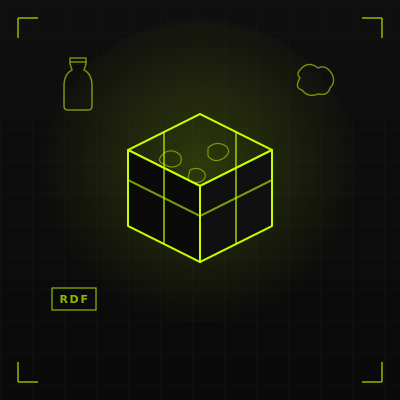
RDF & Non-Recyclable Plastics
Feedstock RDF & Non-Recyclable Plastics Packaging waste and mixed plastics.
Sewage Sludge
Feedstock Sewage Sludge Sludge from wastewater treatment plants and industrial processes.
Biomass & Biowaste
Feedstock Biomass & Biowaste Agricultural residues, wood chips, and other organic materials.residues, wood chips, organic waste.

From Syngas to Energy, Hydrogen and Materials

LOOPER produces syngas and a solid residue. Depending on the system configuration and end-user requirements, these outputs can be further valorised through energy and material applications.

Output 01
Gaseous Output

Hydrogen-Rich Syngas

The primary gaseous product of the LOOPER process which, depending on the system configuration, can be used to produce thermal and/or electrical energy or for hydrogen extraction.

Output 03
Solid Output

Ash and Biochar

The solid residue is characterised to determine opportunities for its further use, including potential valorisation in construction materials.

Advantages of the LOOPER System

A comparison of LOOPER’s key characteristics with conventional approaches to thermochemical waste conversion.

Feature INDELOOP LOOPER Typical Competitors
Technology Readiness TRL 6+ for key system components TRL 3–5 (testing stage)
Feedstock Versatility Textile waste, RDF, non-recyclable plastics, sludge, biomass and biowaste Often optimised for a narrower range of feedstocks
Product Valorisation Valorisation of syngas and solid residue Often primarily focused on syngas valorisation
System Flexibility Thermal or electrical energy, with the possibility of hydrogen extraction Limited to configurations producing a single form of energy
Solid Residue Applications Research and demonstration of applications in construction materials through the AshCycle project Solid residue valorisation is often not a primary focus
Modularity & Adaptability System configuration based on feedstock, capacity, site conditions, and end-user requirements Lower adaptability
CO₂ Emission Savings Demonstrated reduction in CO₂ emissions Not demonstrated

Want to Deploy LOOPER at Your Site or in Your Project?

Tell us about your waste streams, and we'll get back to you with an initial feasibility assessment.

Start a Conversation